

How Often To Clean Carbs On 2 Stroke Outboard
two-Stroke Carb Tuning And Adjustment
This 2-stroke carb tuning guide volition give you all the data you demand to tune your 2-stroke carburetor for peak operation, no thing the make or model. Once you understand the basic functionality of ane two-stroke carburetor, you lot can utilise that understanding to ANY carburetor.
 Almost all 2-stroke carbs operate the same way. Although some may have different configurations or features, they all exercise the same thing – mix fuel and air.
Knowing how to change your jets and needles is one affair, merely it won't practice you any good if yous don't sympathise how the changes will affect your dirt cycle.
Parts of the Carburetor and What They Practice
Carburetor Torso
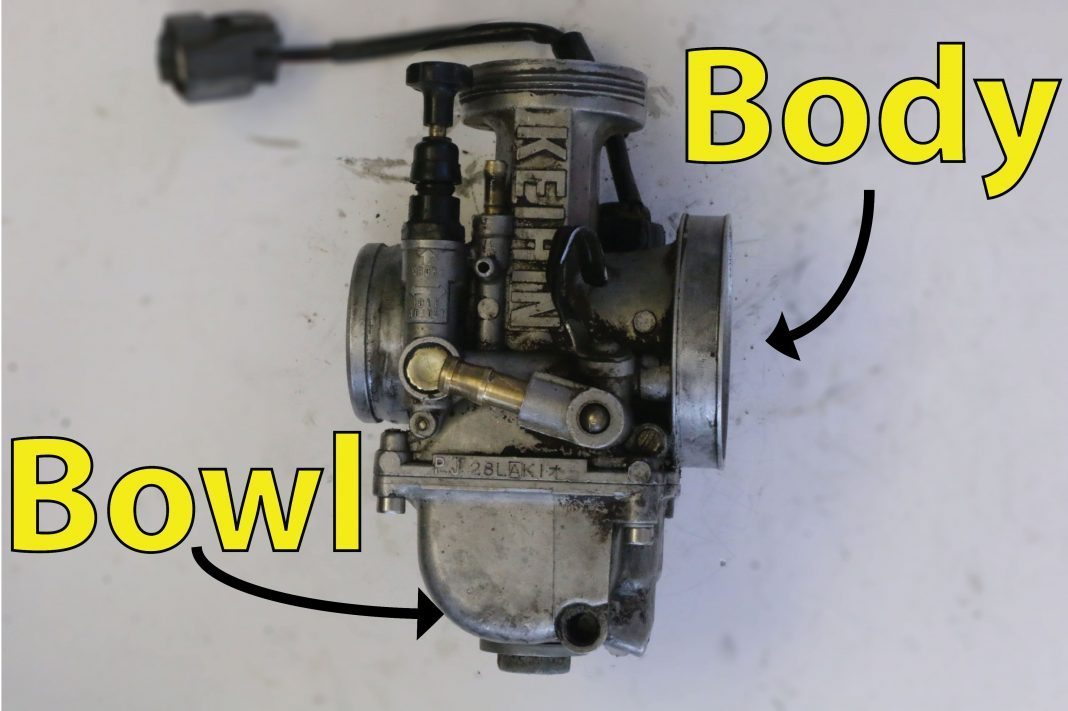
- Torso – The carburetor body houses all the moving parts and jets, and mixes the air and fuel on its mode to the cylinder.
- Bowl – The carburetor basin is located on the lesser of the carb and holds the fuel to be sent through the jets. The bowl as well houses the float assembly.
Internal Carburetor Components
- Float Assembly – The float assembly sits inside the bowl to regulate the fuel level in the carburetor bowl. The floats are made of hollow plastic or metal continued to the carburetor trunk by a hinge. These floats demand to be in skillful shape. No 2-stroke carb adjustments will piece of work if the bowl is always flooding.
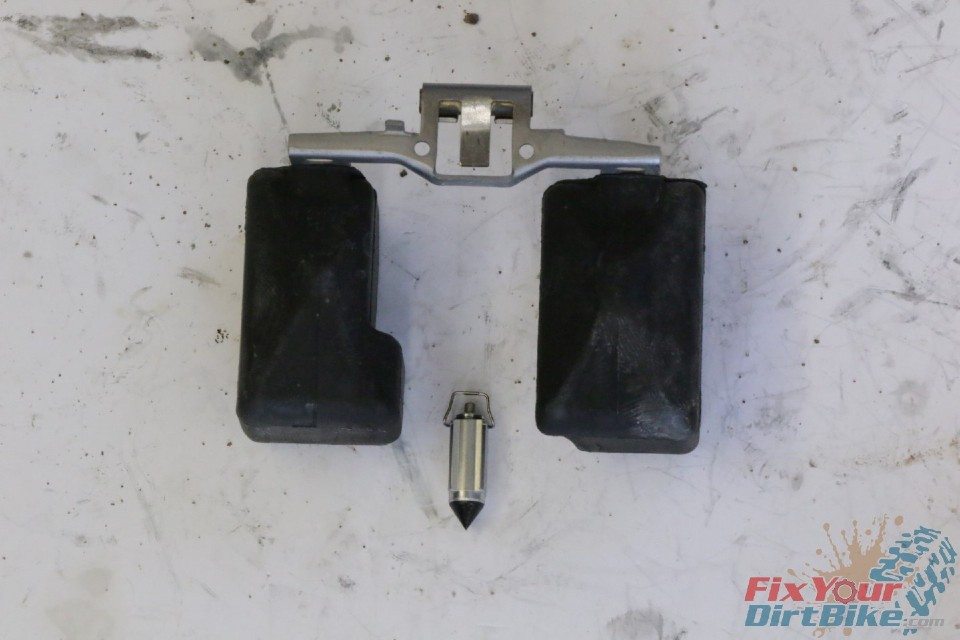
Plastic Float associates - Float Valve – The float valve regulates the flow of fuel from the fuel tank to the carburetor bowl.
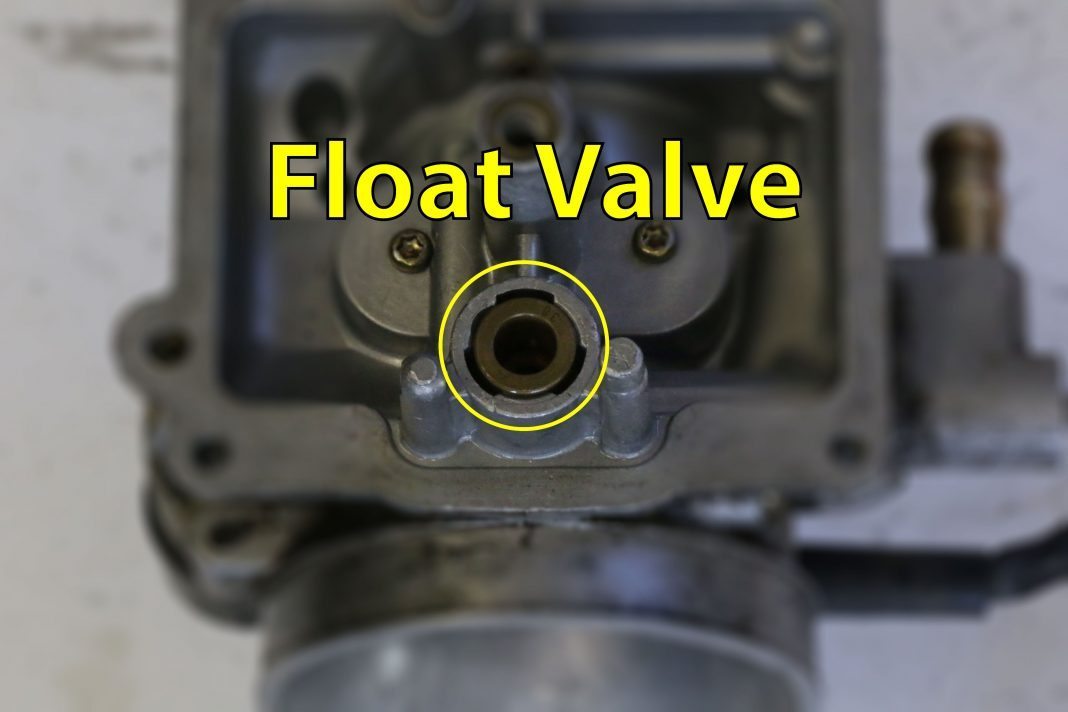
2-Stroke Carburetor Float Valve Seat
Air/Fuel Flow
- Airplane pilot Air Screw – Controls idle speed by regulating the amount of air passing through the pilot jet passage. This is where you will spend a lot of time during 2-stroke carb tuning. Getting that idle just right can exist catchy sometimes.
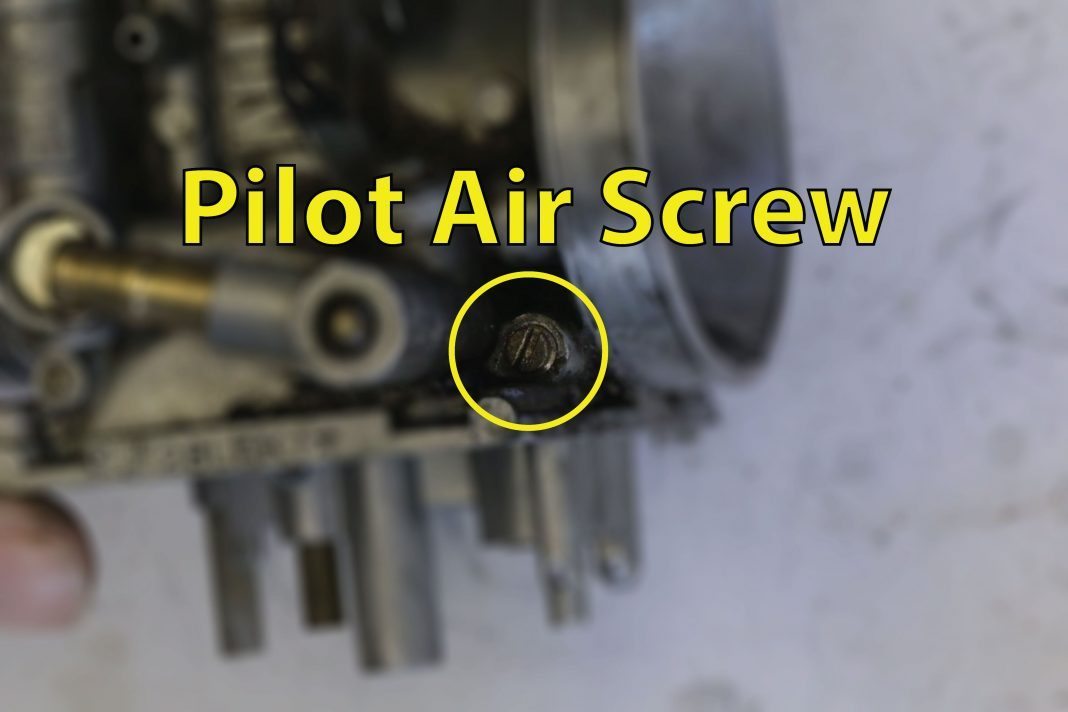
Pilot Air Spiral - Throttle Valve – The throttle valve is directly connected to the throttle cable and regulates the menses of air through the carburetor. You will almost always find a slide style throttle valve on 2-stroke carburetors. They come in many shapes, only their office is the same.
Throttle Valve Parts 
Valve Assembly 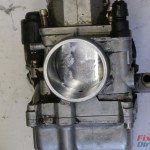
Closed 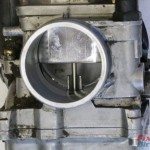
Half Open up 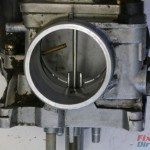
Open 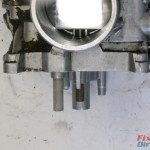
1/4 Open With Jet 
Closed Without Needle
2-Stroke Carburetor Jetting Construction
Slow Jet
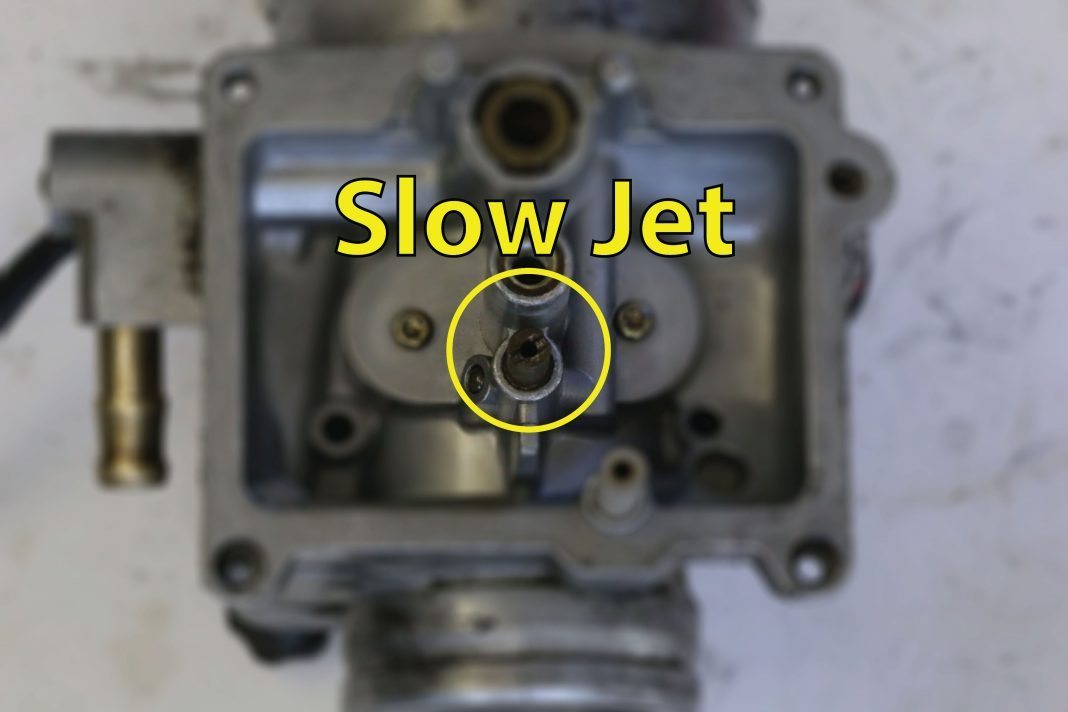
The slow jet works with the pilot air screw. This system controls the air-fuel ratio from closed throttle to ¼ throttle. The slow jet draws fuel from the bowl and mixes it with air from the airplane pilot air jet passage. The atomized air/fuel mixture and then passes into the throat of the carburetor. Turning the airplane pilot air spiral in will richen the air/fuel mixture while turning the screw out will lean out the mix. The slow jet is interchangeable with jets that will provide a leaner or richer air-fuel mixture. Replacing the existing boring jet with a higher-numbered jet will make the mixture richer, while a lower-numbered jet will make the mixture leaner.
Jet Needle
The jet needle is connected to the throttle valve and controls the mixture from approximately ¼ – ¾ throttle. The needle seats into the needle jet and regulates the air-fuel mixture from the jet to the carb throat. During your 2-stroke carb adjustment, pay close attention to the needle. The jet needle regulates fuel past its taper, bore, and clip position. In the closed throttle position, the tapered needle shuts off flow from the needle jet. As the throttle is opened, the needle allows fuel to pass past the taper and betwixt the straight portion of the needle and jet wall. The position of the needle in the jet can be adjusted by removing the needle clip and positioning it on a higher or lower groove in the needle. Raising the prune volition lower the needle into the jet, creating a lean mixture; lowering the clip volition enhance the needle, creating a rich condition.
Principal Jet
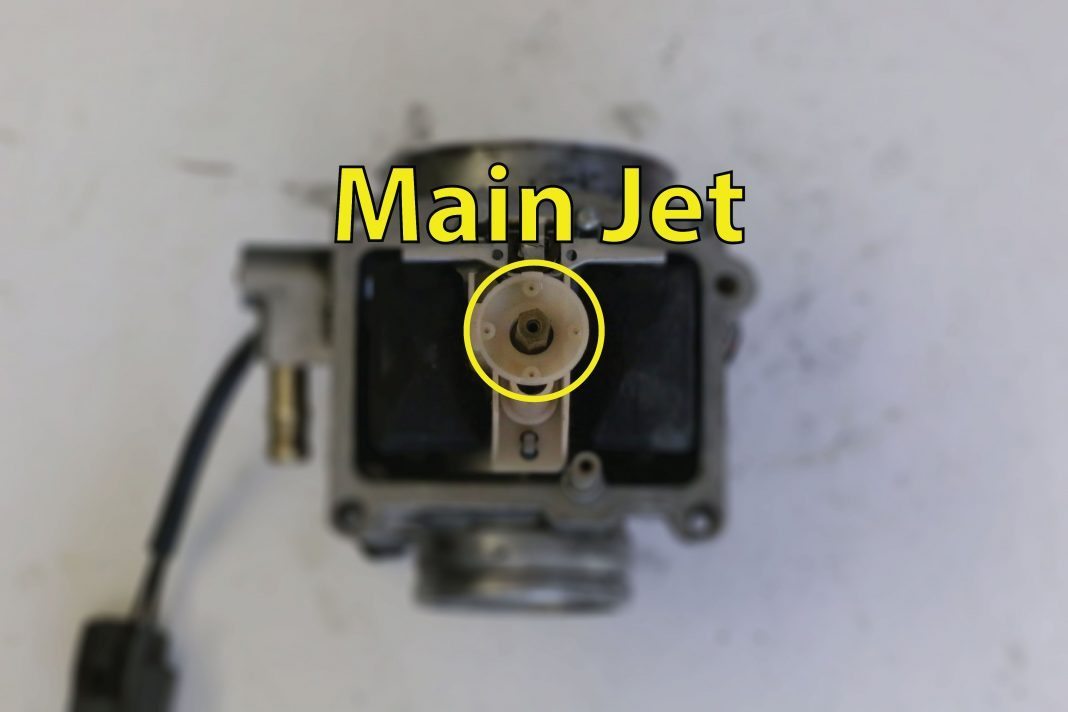
The main jet is screwed to the bottom of the needle jet and controls the mixture from approximately ¾ to full throttle. The master jet is numbered and is interchangeable with jets that will provide a leaner or richer air-fuel mixture. Replacing the existing jet with a higher numbered jet will make the mixture richer, while jets with a smaller number volition make the mixture leaner.
Why Proper Carb Tuning Is Critical For 2-Stroke Engines
Improper two-stroke carburetor tuning will have a much more significant effect on a two-stroke engine than a four-stroke because the premixed oil lubricates the crankshaft. A rich mixture will cause poor functioning, only a lean mixture can destroy your engine (over time).
At its most basic level, an engine is just an air pump, and what is mixed with the air is what makes it run. All a carburetor does is allow fuel be sucked into the engine with the air. This is where the sizing of the jets comes in.
Your carburetor needs to exist adjusted co-ordinate to the ambient temperature, humidity, and altitude of operation due to the oxygen density of the air changing with these variables.
If you have modified your ii-stroke with different reeds or an aftermarket frazzle pipe, you need to account for the increased airflow every bit well.
Carburetor Tuning Variables
Without getting into also much detail, below are some general guidelines on oxygen levels in the air.
- Temperature – The colder the temperature, the denser the oxygen levels.
- Humidity – More than boiling the air is, the less dense the oxygen levels.
- Altitude – The higher you get, the thinner the air gets, resulting in lower oxygen levels.
If y'all want to get into the physics of air density, click here, otherwise, the above information will work.
Changing the carburetor jets is how yous compensate for changing oxygen density: more oxygen requires more fuel to even out the air/fuel mixture.
Tuning Your 2-Stroke Carburetor For Peak Performance
There are three ways to tune your carburetor to the temperature and superlative.
- Manufacturing plant Supplied Chart – If you're lucky, your bike volition have a jetting chart available from the manufacturer, and then bank check with them first.
- Original Factory Configuration – If you know your carburetor's manufacturing plant settings, you lot will have a good starting point and tin make more authentic adjustments.
- From Scratch – If you are starting from scratch, yous volition accept to begin past making major adjustments and gradually narrow your tuning down. (Better in the long run.)
With each method, the just mode to properly tune your carb is to keep track of every change you make and tape the results.
Too Much (rich) Or Too Trivial (lean) Fuel?
The last piece of the 2-stroke carb tuning puzzle is knowing how to identify an unbalanced air/fuel ratio.
The simplest way to tune your carburetor air/fuel mixture is to wait at your spark plug.
- If the plug is black with soot, the mixture is likewise rich.
- If the plug is white (burned), the mixture is too lean.
Y'all can also decide the air/fuel ratio based on the performance of your dirt cycle. If your wheel bogs downward under acceleration, the mixture is too rich. If you have off quickly, but your bike lacks power overall, the mix is likewise lean.
Fixing this is as elementary as changing the main jet. So you can get ride, but if you want to punch in the tuning of your carburetor from idle to full throttle, go along going!
Remember when the jets and needle come into play, and test the operation at each throttle position:
- Slow Jet – Closed to ¼ throttle
- Jet Needle- ¼ to ¾ throttle
- Principal Jet – ¾ to full throttle
Wait for The Signs Of A Bad Ratio
- Too much fume = Rich
- Too little fume = Lean
- Un-burnt fuel/oil sludge leaking from the muffler = Rich
- Rough idle/no idle = Dull Jet System
- Backfire = Lean
- Bogging
Listen To The Bog
There are two types of bogging that volition tell you if you are rich or lean.
- Rich bogging sounds more of a "chug chug chug" sputter nether throttle.
- The "chug" is acquired by too much fuel in the cylinder, resulting in incomplete combustion.
- Lean bogging is a sustained "booooouuuuuuuuuhhhhhhhhg" nether throttle.
- The "bouhg" is acquired past likewise much oxygen combusting, which does not create power on its own.
- Typically, loftier-finish bogging is lean, depression-end bogging is rich, only the opposite is withal possible.
Yous will need to start with a general diagnosis and narrow down what needs to be adjusted.
Follow the flowchart below to start tuning your carburetor! Remember to tape every change y'all make along with the temperature and distance. The following tuning flowchart is based on:
- The ignition system is operating correctly
- The fuel is fresh and mixed properly
- The carburetor is make clean, and the floats are adjusted
- The air filter is make clean
Side Notation : If your carburetor is equipped with an idle adjustment knob, set it to a neutral position earlier adjusting the airplane pilot air screw. (The idle knob is used for quick adjustments to the air-fuel mix and should non exist used for tuning.)
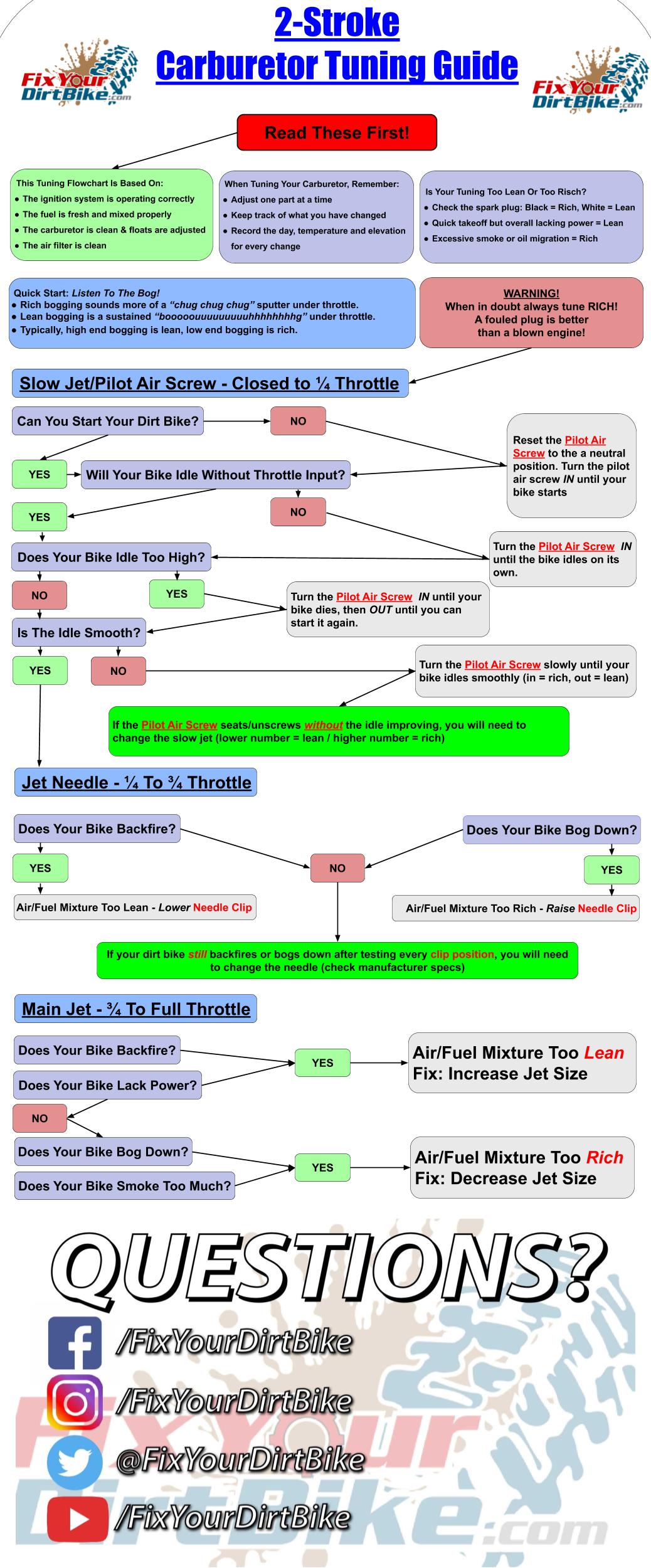
**If you are experiencing poor functioning, check the post-obit before re-jetting the carburetor!!**
- Bad fuel
- Wrong fuel/oil ratio
- Throttle cable dragging or out of adjustment
- Air filter
- Fuel flow – filter or fuel line plugged
- Timing
- Choke
- Muffler
- Brakes
If you accept any questions or annihilation to add, please leave them in the comments or on our FaceBook folio!


Source: https://www.fixyourdirtbike.com/fix/how-to/2-stroke-carb-tuning/
Posted by: duartedenjudd67.blogspot.com
0 Response to "How Often To Clean Carbs On 2 Stroke Outboard"
Post a Comment